
Finding the perfect jacket fit is crucial for both comfort and style‚ avoiding fashion mishaps entirely. Our comprehensive guide simplifies
the process‚ offering charts and measurement tips for men‚ women‚ and children‚ ensuring a snap to find your ideal size.
Why Accurate Jacket Measurements Matter
Precise jacket measurements are paramount to avoiding ill-fitting garments and maximizing your style potential. A poorly fitted jacket can restrict movement‚ appear unflattering‚ and even compromise warmth. Accurate sizing ensures a comfortable‚ functional‚ and aesthetically pleasing experience.
Taking the time to measure yourself correctly‚ utilizing a flexible tape measure‚ and referencing a reliable jacket size chart is a worthwhile investment. This proactive approach prevents the frustration of returns and exchanges‚ saving both time and money. Remember to account for layering – if you plan to wear sweaters or other bulky items underneath‚ adjust your measurements accordingly.
Furthermore‚ understanding that sizing can vary between brands is essential. A size medium in one brand might not equate to the same fit in another. Therefore‚ consulting brand-specific size charts‚ when available‚ is highly recommended for a truly personalized fit. Don’t hesitate to try on different sizes to find the best possible match!
Understanding Different Jacket Styles & Fit
Jacket styles significantly influence the desired fit. A streamlined‚ fitted bomber jacket demands a closer‚ more precise measurement than a relaxed‚ oversized parka. Understanding these nuances is key to selecting the correct size. Consider the intended use – a motorcycle jacket requires a snug fit for protection‚ while a casual denim jacket allows for more freedom of movement.
Different fits – slim‚ regular‚ relaxed‚ and oversized – also impact sizing. A slim-fit jacket will generally require a slightly larger size to accommodate the closer cut. Conversely‚ a relaxed or oversized style might benefit from sizing down for a more tailored look. Always check the product description for details on the jacket’s intended fit.
Finally‚ remember that certain styles‚ like blazers or tailored coats‚ often have specific construction features that affect how they should fit across the shoulders and chest. Prioritize a comfortable range of motion and a flattering silhouette when choosing your size.

Key Measurements for Jackets
Accurate measurements – chest‚ shoulder‚ sleeve length‚ and back length – are fundamental to finding the right jacket size‚ ensuring optimal comfort and style.
Chest Measurement Guide
Measuring your chest accurately is the cornerstone of finding a well-fitting jacket. Begin by standing naturally with your arms relaxed at your sides. Use a flexible tape measure‚ ensuring it’s snug but not tight‚ and wrap it around the fullest part of your chest.
This is typically across the nipples‚ but may vary depending on your body shape. Keep the tape measure level across your back‚ and exhale normally while taking the measurement. Record this measurement in inches.
For the most accurate result‚ it’s helpful to have someone else assist you. Compare your chest measurement to the jacket size charts provided by the manufacturer. Remember that some jackets are designed for layering‚ so you may need to add a couple of inches to your chest measurement if you plan to wear bulky clothing underneath. Consult brand-specific sizing as chest measurements can vary.
Shoulder Measurement Guide
Accurately measuring your shoulders is vital for a comfortable and well-proportioned jacket fit. To begin‚ stand naturally with your arms relaxed. You’ll need a flexible tape measure for this step. Locate the bony prominence at the end of your shoulder – this is where your shoulder meets your arm.
Wrap the tape measure from this point on one shoulder‚ across your back‚ to the same point on the other shoulder. Ensure the tape measure follows the natural curve of your shoulders and remains level. Record this measurement in inches.
Consider the jacket style; some styles‚ like fitted jackets‚ require a closer shoulder fit‚ while others offer more room. Compare your shoulder measurement to the size charts provided by the jacket brand. Remember that variations exist between manufacturers‚ so always check the specific chart for the best results.
Sleeve Length Measurement Guide
Determining the correct sleeve length ensures your jacket doesn’t restrict movement or appear awkwardly short. Begin by bending your elbow slightly – approximately 90 degrees. Have someone assist you with this measurement for greater accuracy. Place the tape measure at the center back of your neck‚ following the natural curve of your shoulder‚ down your arm‚ and ending at your wrist bone.
Ensure the tape measure remains taut but not overly tight. Record this measurement in inches. Consider the type of jacket; a longer sleeve is often preferred for winter coats to accommodate layering‚ while a shorter sleeve might suit a lighter jacket.
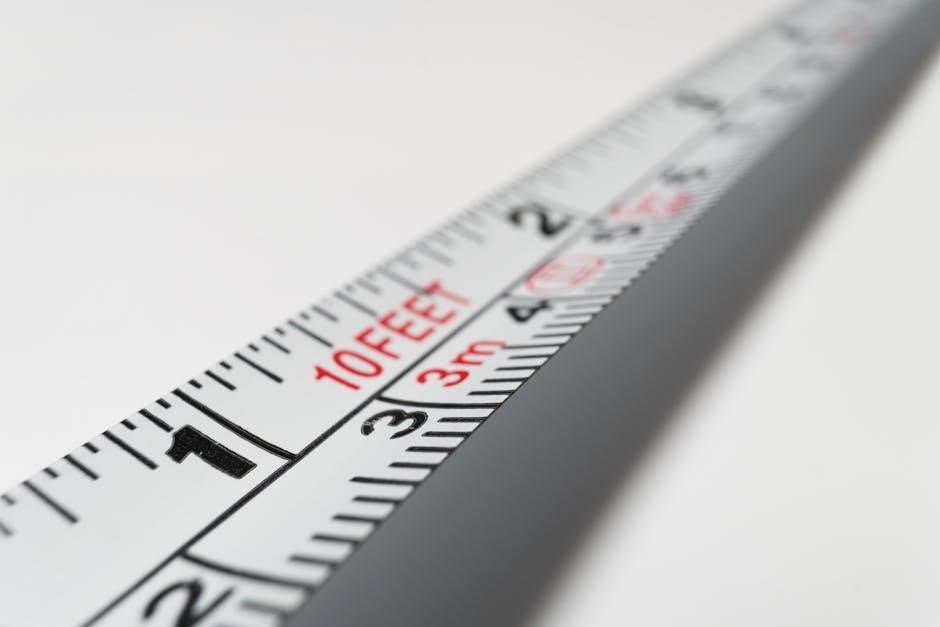
Always consult the brand’s size chart‚ as sleeve lengths can vary significantly. Some charts may list sleeve length from the center back‚ while others measure from the shoulder seam.
Back Length Measurement Guide
Accurately measuring back length is vital for a jacket that fits comfortably and proportionally. Begin at the highest point of your shoulder – where the shoulder seam meets the collar. Then‚ measure straight down your back to the desired length‚ typically to the top of your hip or slightly below.
Have a friend assist to ensure the tape measure remains straight and follows the curve of your spine. Record this measurement in inches. The ideal back length depends on the jacket’s style; longer lengths offer more coverage‚ while shorter lengths provide greater mobility.
Remember to check the specific brand’s size chart‚ as back lengths can differ. Some manufacturers measure from the center back‚ while others may measure from the shoulder seam.

Jacket Size Charts ー Men
Explore our detailed men’s jacket size charts‚ including US‚ UK‚ and European conversions‚ to pinpoint your perfect fit with ease and confidence.
US Men’s Jacket Size Chart
Navigating US men’s jacket sizes requires understanding the correlation between chest‚ waist‚ and hip measurements. This chart serves as a foundational guide‚ though variations exist between brands. Generally‚ a Small (S) fits a chest circumference of 36-38 inches‚ a waist of 30-32 inches‚ and hips around 36-38 inches.
Medium (M) typically accommodates a 38-40 inch chest‚ 32-34 inch waist‚ and 38-40 inch hips. For a 40-42 inch chest‚ 34-36 inch waist‚ and 40-42 inch hips‚ Large (L) is usually appropriate. Extra Large (XL) suits a 42-44 inch chest‚ 36-38 inch waist‚ and 42-44 inch hips.
Beyond XL‚ sizes increase in two-inch increments. Remember‚ these are approximate; always consult the specific brand’s size chart for the most accurate fit. Oakley‚ for example‚ provides specific chest‚ waist‚ and hip measurements for each size (XS: 104cm chest‚ S: 109cm chest‚ etc.).
UK Men’s Jacket Size Chart
Understanding UK men’s jacket sizing involves converting from US measurements‚ as there are distinct differences. A UK size 38 typically corresponds to a US size 40‚ a 40 UK equates to a US 42‚ and so on. Generally‚ a Small (S) in the UK fits a 36-38 inch chest. A Medium (M) accommodates a 38-40 inch chest‚ while a Large (L) suits a 40-42 inch chest.
Extra Large (XL) generally fits a 42-44 inch chest‚ and sizes continue to increase in two-inch increments. However‚ brand-specific variations are common. It’s crucial to consult the individual retailer’s chart.
Consider that UK sizing often runs smaller than US sizing. Therefore‚ if you’re between sizes‚ it’s generally advisable to size up. Always prioritize accurate chest measurement for the best fit. Remember to account for layering when determining your ideal size‚ ensuring comfortable movement and style.
European Men’s Jacket Size Chart
Navigating European men’s jacket sizing requires understanding its numerical system‚ differing from US and UK conventions. European sizes are typically represented by centimeters corresponding to chest circumference. A size 48 generally fits a 96-98cm chest‚ while size 50 suits a 100-102cm chest. Size 52 accommodates a 104-106cm chest‚ and so on‚ increasing in 4cm increments.
However‚ variations exist between brands‚ so always refer to the specific size chart provided by the retailer. Converting from US or UK sizes can be tricky; a US 38 often translates to a European 48‚ but it’s not a universal rule.
Prioritize measuring your chest accurately in centimeters for the most reliable fit. Consider layering when selecting your size‚ ensuring comfortable movement. European sizing tends to be more precise‚ so attention to detail is key.

Jacket Size Charts ー Women
Discovering the perfect jacket fit for women involves understanding specific measurements and utilizing our detailed charts‚ ensuring both style and comfort are achieved effortlessly.
US Women’s Jacket Size Chart
Navigating US women’s jacket sizing requires understanding how measurements translate into standard sizes. This chart provides a general guideline‚ but remember that variations exist between brands and jacket styles. Accurate chest measurement is paramount; measure around the fullest part of your bust‚ keeping the tape measure level.
Typically‚ a chest measurement of 32-33 inches corresponds to a US size Small (S)‚ 34-35 inches to a Medium (M)‚ 36-37 inches to a Large (L)‚ and 38-39 inches to an Extra Large (XL). However‚ shoulder measurements and sleeve length also play a vital role. Consider your body shape and desired fit – a fitted jacket will require a closer measurement than a relaxed style.
Always consult the specific brand’s size chart‚ as sizing can differ significantly. Don’t hesitate to read customer reviews for insights into how a particular jacket fits. When in doubt‚ it’s often best to size up‚ especially if you plan to layer clothing underneath.
UK Women’s Jacket Size Chart
Understanding UK women’s jacket sizing necessitates converting US measurements or directly utilizing the UK standard. A crucial first step is obtaining an accurate chest measurement‚ taken around the fullest part of the bust while maintaining a level tape measure. Generally‚ a chest size of 32-33 inches equates to a UK size 8‚ 34-35 inches to a size 10‚ 36-37 inches to a size 12‚ and 38-39 inches to a size 14.
However‚ remember that shoulder width and sleeve length are equally important for a comfortable fit. UK sizing can sometimes run smaller than US sizing‚ so checking brand-specific charts is vital. Consider the jacket’s intended use; a fitted style requires a precise measurement‚ while a looser fit allows for more flexibility.
Always prioritize reviewing customer feedback for insights into a jacket’s true size. If between sizes‚ opting for the larger size is often advisable‚ particularly if layering is anticipated.

European Women’s Jacket Size Chart
European women’s jacket sizing differs from both US and UK standards‚ requiring careful conversion for accurate fit. Begin by measuring your bust circumference – the fullest part‚ keeping the tape measure horizontal. European sizes are typically based on this measurement. A bust of 84-88cm generally corresponds to a size 36 (EU)‚ 92-96cm to a size 38‚ 100-104cm to a size 40‚ and 108-112cm to a size 42.
However‚ shoulder measurements and sleeve length are also critical. European sizing can be more consistent than US sizing‚ but brand variations still exist; Always consult the specific brand’s size chart.
Consider the jacket’s style; a tailored fit demands precision‚ while a relaxed style offers more leeway. Don’t hesitate to read reviews for real-world sizing feedback. If unsure‚ choosing the larger size is often preferable.
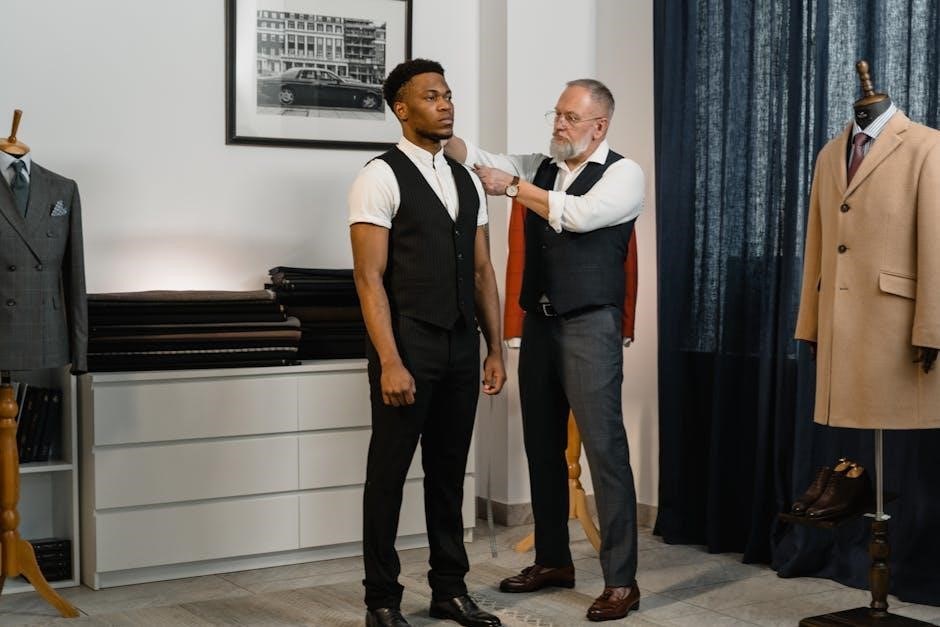
Jacket Size Charts ー Kids
Kids’ jacket sizing relies on both age and physical measurements‚ like height and weight‚ for the best fit and comfortable wear.
Kids’ Jacket Size Chart (by Age)
Navigating kids’ jacket sizes by age can be a starting point‚ but remember children grow at different rates! This chart provides a general guideline‚ but always cross-reference with height and weight for a more accurate fit.
| Age (Years) | Chest (inches) | Height (inches) | Typical US Size |
|---|---|---|---|
| 2-3 | 20-22 | 34-38 | 2T-3T |
| 4-5 | 22-24 | 38-42 | 4T-5T |
| 6-7 | 24-26 | 42-46 | 6-7 |
| 8-9 | 26-28 | 46-50 | 8-9 |
| 10-12 | 28-30 | 50-54 | 10-12 |
Important Note: These are approximate sizes. Always measure your child and consult the specific brand’s size chart‚ as variations exist. Prioritize comfort and room for layering!
Kids’ Jacket Size Chart (by Height/Weight)
For a more precise fit‚ utilize a kids’ jacket size chart based on height and weight. Age can be misleading due to individual growth patterns. This method offers a more tailored approach to finding the right size‚ ensuring both comfort and practicality for active children.
| Height (inches) | Weight (lbs) | Chest (inches) | Typical US Size |
|---|---|---|---|
| 34-38 | 25-35 | 20-22 | 2T-3T |
| 38-42 | 35-45 | 22-24 | 4T-5T |
| 42-46 | 45-55 | 24-26 | 6-7 |
| 46-50 | 55-65 | 26-28 | 8-9 |
| 50-54 | 65-80 | 28-30 | 10-12 |
Remember to check the brand’s specific size guide‚ as these are general estimations. Allow room for layering and growth!
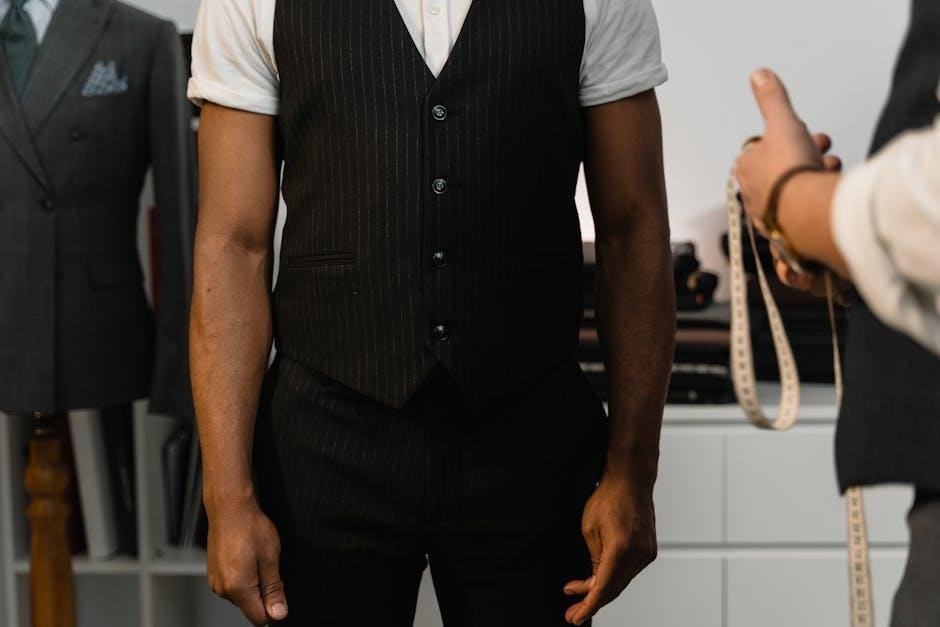
Size Conversion Charts
Seamlessly translate jacket sizes between US‚ UK‚ and EU standards‚ and even convert between men’s and women’s sizing‚ using our professional charts.
Converting Between US‚ UK‚ and EU Jacket Sizes
Navigating international sizing can be tricky‚ but our conversion charts make it straightforward. Understanding that jacket sizes aren’t standardized globally is the first step. US sizes generally run larger than UK and EU sizes‚ so a direct conversion isn’t always accurate.
For men’s jackets‚ a US size Medium often corresponds to a UK size 38-40 and a European size 50-52. Women’s sizes follow a similar pattern‚ with a US size 8 translating to a UK size 12 and a European size 38. However‚ these are approximate guidelines.
Always prioritize chest measurement when converting. Utilize our charts to find the equivalent size based on your specific inch measurement. Remember to account for any desired layering when determining your ideal fit. These conversions are a starting point; brand-specific sizing may vary‚ so always consult the individual brand’s size chart when available.
Men’s to Women’s Jacket Size Conversion
Converting between men’s and women’s jacket sizes isn’t a simple arithmetic equation‚ as body shapes differ significantly. Women’s jackets are typically cut to accommodate a smaller waist and wider hips compared to men’s jackets. A general rule of thumb is to subtract 1-2 sizes when transitioning from men’s to women’s sizing‚ but this is a broad generalization.
Focus on chest measurement as the primary factor. If a man’s chest measures 42 inches‚ a woman with the same measurement would likely fit into a size 12-14‚ depending on the brand and style. However‚ shoulder width and sleeve length also play crucial roles.
Always consult specific brand charts‚ as variations are common. Consider the jacket’s cut – a tailored fit will require a more precise conversion than a relaxed style. Trying on both sizes is recommended for the most accurate fit.
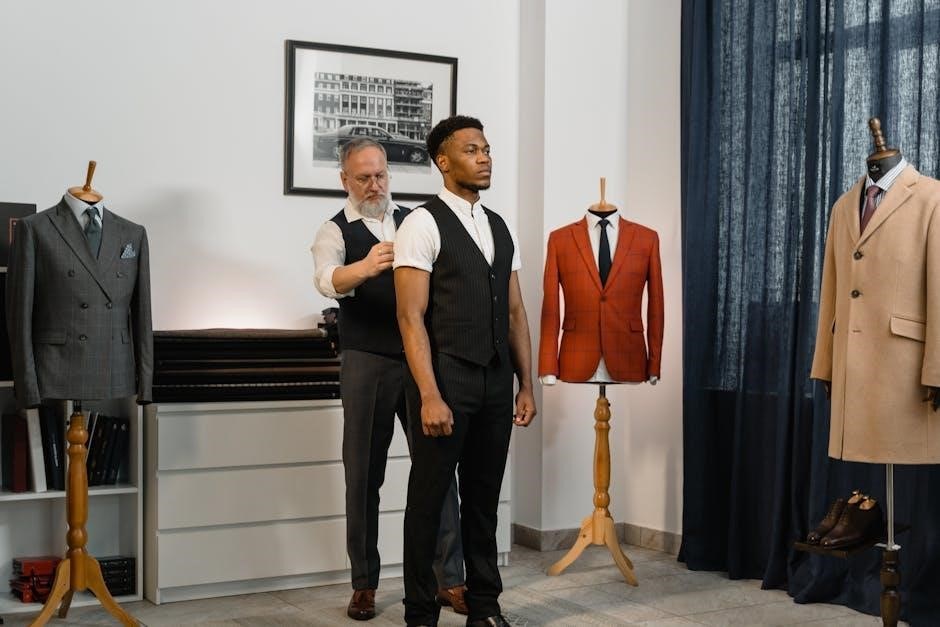
Brand-Specific Sizing Considerations
Jacket sizing varies significantly between brands; always check individual size charts‚ like Oakley or Yoko YXC‚ for accurate measurements and optimal fit.
Oakley Jacket Size Chart Example
Oakley provides a detailed size chart to help customers find their perfect fit‚ focusing on chest‚ waist‚ and hip measurements. Understanding these dimensions is key to selecting the correct jacket size. Here’s an example of their men’s jacket size guide:
- XS (Extra Small): Chest ― 104 cm (41 inches)‚ Waist ー 102 cm (40 inches)‚ Hips ー 104 cm (41 inches)
- S (Small): Chest ー 109 cm (43 inches)‚ Waist ― 107 cm (42 inches)‚ Hips ー 109 cm (43 inches)
- M (Medium): Chest ― 114 cm (45 inches)‚ Waist ― 112 cm (44 inches)‚ Hips ー 114 cm (45 inches)
- L (Large): Chest ― 119 cm (47 inches)‚ Waist ― 117 cm (46 inches)‚ Hips ― 119 cm (47 inches)
- XL (Extra Large): Chest ― 124 cm (49 inches)‚ Waist ― 122 cm (48 inches)‚ Hips ― 124 cm (49 inches)
Remember to measure yourself accurately and compare your measurements to Oakley’s chart. Consider whether you plan to layer clothing underneath the jacket‚ as this may influence your size choice.
Yoko YXC Jacket Men Size Chart Example
Yoko YXC offers specific measurements for their men’s jackets‚ crucial for achieving an optimal fit. This chart details key dimensions like bottom width‚ back length‚ and sleeve length‚ aiding in precise size selection. Here’s a breakdown of their sizing:
- 1/2 Bottom width: 49 cm (19.3 inches) & 51 cm (20.1 inches)
- Back length: 66 cm (26 inches) & 68 cm (26.8 inches)
- Sleeve length: 79 cm (31.1 inches) & 81 cm (31.9 inches)
- 1/2 Armhole width: 22 cm (8.7 inches) & 23 cm (9.1 inches)
- Collar: Measurements vary; refer to the full chart for details.
To determine your Yoko YXC jacket size‚ carefully measure yourself and compare your results to this chart. Account for any desired layering to ensure comfortable movement and a flattering silhouette.

Tips for Finding the Perfect Fit
Accurate measurements with a flexible tape are key‚ alongside considering layering for comfort; Don’t hesitate to try on multiple sizes!
Measuring with a Flexible Tape Measure
Utilizing a flexible tape measure is paramount for achieving accurate jacket sizing. Ensure the tape is snug but not overly tight against your body. When measuring your chest‚ stand naturally and have someone else take the measurement‚ or use a mirror for self-measurement. Position the tape under your armpits‚ across the fullest part of your chest‚ and keep it level.
For shoulder measurements‚ measure from the outer edge of one shoulder to the outer edge of the other‚ across the back. Sleeve length is best measured with a slightly bent arm; measure from the shoulder point down to the wrist bone. Finally‚ back length is taken from the base of the neck to the desired jacket hem length.
Record all measurements in inches for easy reference with US size charts. Double-check each measurement to minimize errors‚ as even small discrepancies can impact the final fit. Remember‚ consistency in your measuring technique is crucial for reliable results.
Accounting for Layering
When selecting a jacket size‚ consider the clothing you’ll typically wear underneath. If you plan to layer sweaters or thick shirts‚ it’s crucial to account for this added bulk during measurement. Don’t measure yourself wearing only a t-shirt if you intend to wear heavier garments with the jacket.
Add approximately 1-2 inches to your chest and shoulder measurements if you anticipate layering. This extra room will prevent the jacket from feeling restrictive or uncomfortable when worn with additional clothing. A slightly looser fit allows for greater freedom of movement and improved comfort.
Consider the jacket’s intended use. A winter coat requires more layering space than a lightweight spring jacket. Always prioritize comfort and mobility when choosing a size‚ ensuring a relaxed yet flattering fit even with layers.